How to Market a Blockchain Project: Where PR Fits and Where It Doesn't
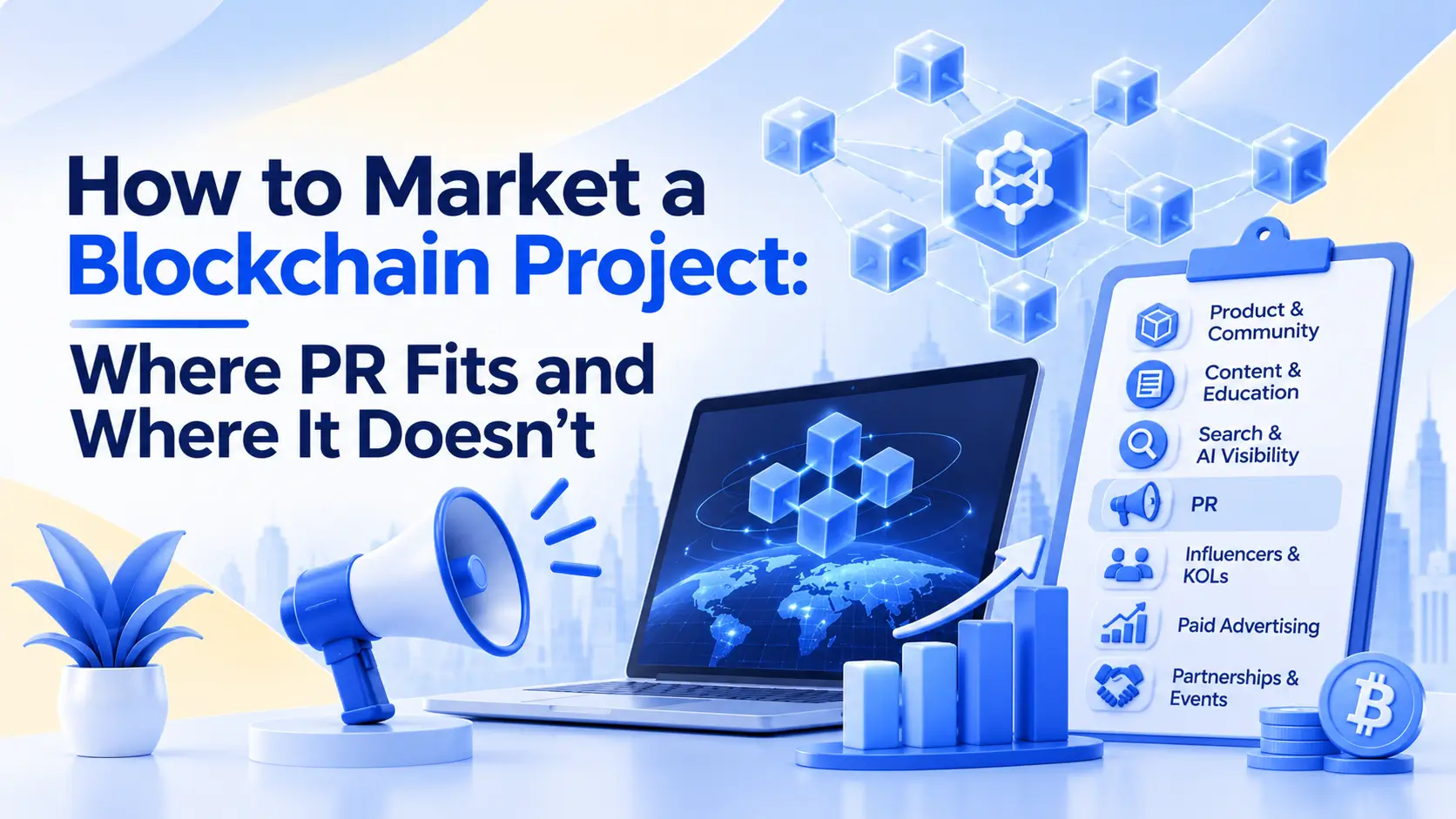
To market a blockchain project well, combine a product people want with a community that uses it, content that explains it, earned coverage that makes it credible, and paid or influencer reach used carefully. PR is one part of that mix. It builds the trust that makes every other channel work better, but it does not replace product, community or growth work, and it cannot carry a launch on its own. This guide sets out the main channels for marketing a blockchain project, what each is good for, how to sequence them across pre-launch, launch and growth, and exactly where PR fits.
What are the main channels for marketing a blockchain project?
Most successful blockchain projects use seven channels, weighted differently by stage and audience:
- Product and community. The product itself, plus the users, builders and holders who talk about it in community channels.
- Content and education. Explainers, documentation, research and posts that help people understand what the project does.
- Search and AI visibility. Making sure people and AI assistants find accurate information when they look the project up.
- Earned media (PR). Independent coverage in crypto, technology, business and regional publications.
- Influencers and KOLs. Creators and opinion leaders who introduce the project to their audiences.
- Paid advertising. Ads on platforms and publications that accept crypto advertising.
- Partnerships and events. Integrations, ecosystem partnerships, conferences and side events.
Developer relations sits across several of these for infrastructure projects, where builders are the first audience.
What is each channel good for, and where does PR fit?
The pattern is consistent: PR is the credibility layer. It works best when it has something real to amplify, and it makes the other channels more effective.
What should a blockchain project do before launch?
Before launch, the priority is foundations, not volume:
- Define the story. What the project does, for whom, and why now, in plain words.
- Build the first community around builders and early users, not just token speculation.
- Publish clear content: documentation, an explainer and a site that answers basic questions.
- Make your facts consistent across your site, profiles and directories, which feeds SEO and GEO optimisation.
- Start relationships with a few reporters who cover your sector, without pitching yet.
- Plan the launch across every channel, including legal review of any claims about tokens or rewards. Obligations depend on licensing and jurisdiction, so involve qualified counsel early.
Our token launch PR playbook sets out the phase-by-phase detail for projects launching a token.
How should channels work together at launch?
At launch, the channels need to move in a deliberate order:
- Community first. Tell the people who already care before they read it elsewhere.
- Earned media next. Offer the story to the right journalist, so credible coverage exists when attention arrives.
- Content ready. Explainers and documentation should be live before traffic does.
- Influencers and partners after the coverage. They can point to independent reporting rather than only to your own claims.
- Paid reach last, if at all, once the message and the landing experience are proven.
Projects launching a token can find launch-specific support on our token launch PR service page.
What changes after launch?
After launch, marketing shifts from announcement to evidence:
- Usage, partnerships and milestones become the raw material for new stories.
- Founder visibility through interviews, podcasts and talks builds lasting authority.
- Data and research from your own network can create stories reporters want.
- Content and coverage are reused across channels through a distribution flywheel, so each piece works harder.
- Paid and influencer spend can be scaled where it is producing real users, and cut where it is not.
Where does PR not fit?
PR is the wrong tool when:
- There is no product or verifiable news yet. Pitches without substance make reporters sceptical of the next one.
- The goal is a short-term price move. That is a market story, not news, and it carries legal risk.
- The project needs users this week. PR builds trust over time; direct growth channels move faster.
- The message is not settled. Coverage of a story that changes next month does more harm than good.
In those situations, invest in product, community and content first, and bring PR in when there is something real to report.
What do blockchain projects get wrong about marketing?
- Treating token price as the marketing goal.
- Buying reach before building trust.
- Announcing to the press before the community.
- Counting sponsored posts as coverage.
- Running channels in isolation, so the press, influencers and community hear different stories.
- Measuring impressions instead of users, builders and partners.
How do you measure blockchain marketing?
Measure each channel against what it is for, and the whole mix against business goals: active users, retained users, developer activity, partnerships, investor conversations and how people and AI assistants describe the project. Our guide to measuring crypto PR results covers the PR part in detail.
Where does a specialist PR team fit in a blockchain marketing plan?
A specialist PR team fits as the credibility layer: finding the real story, earning independent coverage, and making sure the other channels have something trustworthy to point to. It works best alongside product, community and growth teams, not instead of them. Planning how the channels fit together is often the most valuable part of strategic advisory work. GeniusPR (formerly The PR Genius) runs blockchain PR for crypto, Web3 and AI companies, focused on earned coverage that supports wider public relations and marketing plans. Its case studies show recent work.
Frequently Asked Questions
How do you market a blockchain project?
Combine a product people want with a community that uses it, clear content and documentation, accurate search and AI visibility, earned coverage for credibility, and influencer, paid and partnership reach used carefully. Weight the channels by stage and audience, move them in a deliberate order at launch, and measure each against business goals such as users, builders and partners.
Where does PR fit in blockchain marketing?
PR is the credibility layer. It earns independent coverage that reassures investors, partners, institutions and users, and gives influencers, partners and ads something trustworthy to point to. It works best when it has real news to amplify. It does not replace product, community or growth work, and it cannot carry a launch on its own.
What should a blockchain project do before launch?
Define the story in plain words, build a first community of builders and early users, publish documentation and an explainer, make your facts consistent across the web, start relationships with a few relevant reporters, and plan the launch across every channel. Involve qualified counsel early for any claims about tokens or rewards.
In what order should marketing channels run at a crypto launch?
Tell your community first, then make sure credible coverage exists by offering the story to the right journalist, have content and documentation live before traffic arrives, bring in influencers and partners once there is independent reporting to point to, and add paid reach last, once the message and landing experience are proven.
Is PR or influencer marketing better for a crypto project?
They do different jobs. Influencer marketing gives fast reach into specific audiences, while PR builds credibility through independent coverage. Many projects use both, with PR first so creators can point to independent reporting. Influencer content has its own disclosure and legal considerations, so check with counsel before running campaigns.
Can a blockchain project rely on paid advertising?
Rarely on its own. Major ad platforms have their own policies on crypto advertising, which vary by market, so check them and your counsel's advice first. Paid reach also works better when people already recognise and trust the brand, which is where earned coverage and community help. Scale paid spend only where it produces real users.
When is PR the wrong tool for a blockchain project?
PR is the wrong tool when there is no product or verifiable news yet, when the goal is a short-term price move, when the project needs users immediately, or when the core message is not settled. In those cases, invest in product, community and content first, and bring PR in when there is something real to report.
How important is community in blockchain marketing?
Very important. Users, builders and token holders drive word of mouth, retention and trust, and they expect to hear news before or alongside the press. PR and other channels can amplify real community milestones, but they cannot create a community. Plan announcements so community channels and media receive consistent facts in the right order.
What do blockchain projects get wrong about marketing?
Common mistakes include treating token price as the goal, buying reach before building trust, announcing to the press before the community, counting sponsored posts as coverage, running channels in isolation so audiences hear different stories, and measuring impressions instead of users, builders and partners.
How do you measure blockchain marketing?
Measure each channel against what it is for, and the whole mix against business goals: active and retained users, developer activity, partnerships, investor conversations and how people and AI assistants describe the project. Agree the measures before campaigns start, and compare results with your starting point over months rather than days.

book a meeting
Ready to kickstart your brand’s authority?
Please fill out the calender on our
website and we will do a meeting on your desired time.
SCHEDULE A CALL
At Genius PR, we turn signals into stories and stories into systems that move markets.