What Does a Crypto PR Agency Do, Month by Month?
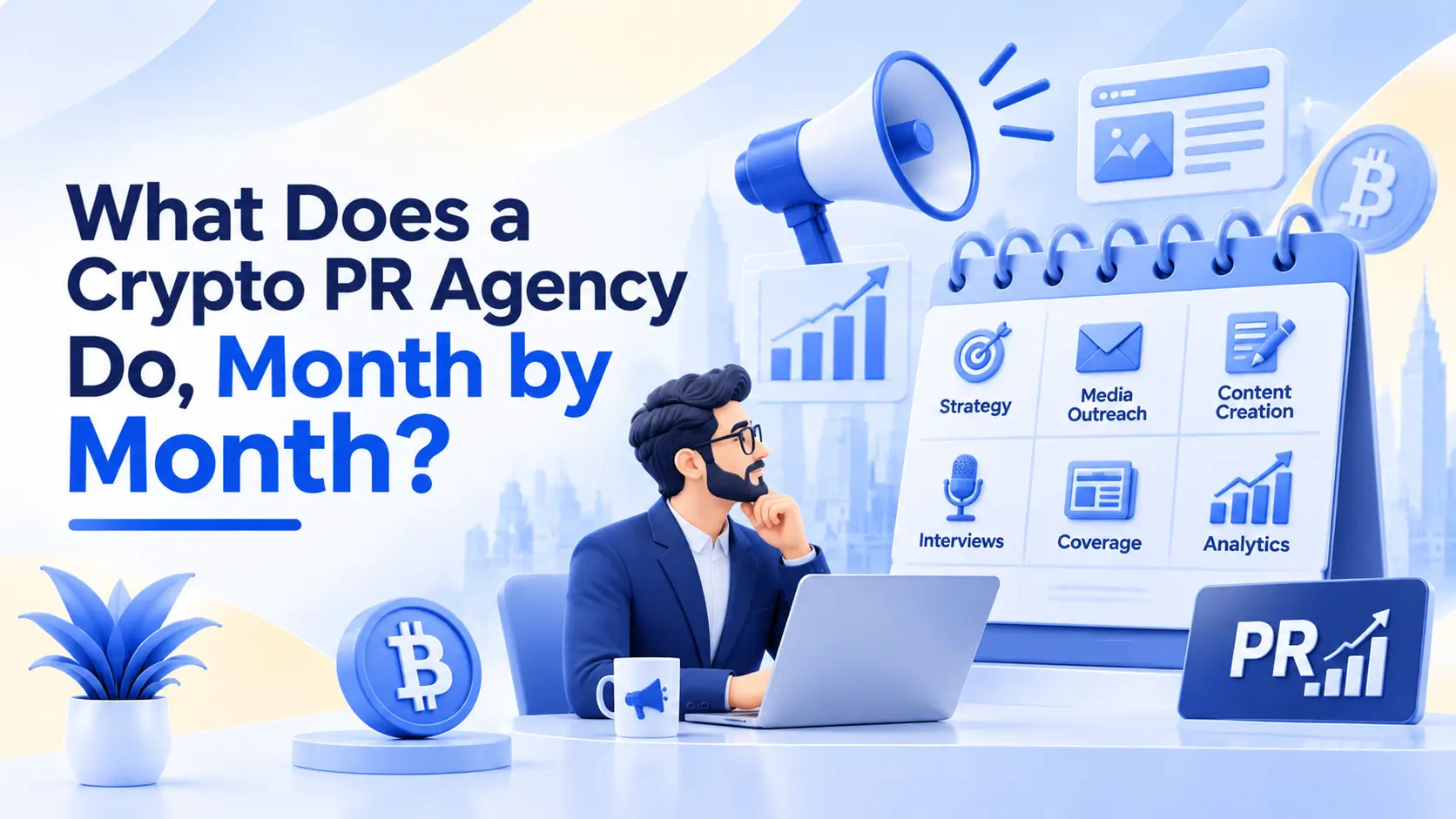
A crypto PR agency spends the first month learning your project and building the foundations, the next two months pitching and securing first coverage, and the following months building on what works around your biggest moments. What it should not do is start pitching on day one, or report activity without results. This guide shows how a typical six-month crypto PR programme runs, what you should receive from the agency each month, what the agency needs from you, and the signs that a programme is off track. Every project is different, so treat this as a shape to compare proposals against, not a promise of results on a fixed date.
What does a six-month crypto PR programme look like?
The table gives the overall shape. The sections below explain each stage.
Month 1: What happens in discovery?
The first month is about understanding the project well enough to tell its story accurately. A good agency will:
- Interview the team about the product, users, roadmap and competitors.
- Agree what is verifiable, such as usage, customers, investors and milestones, and what cannot yet be claimed.
- Write the core messaging: what the project does, why it matters and how to say it in plain words.
- Build a target media list based on who you need to reach, not on the biggest names.
- Prepare spokespeople, including media training for anyone likely to be interviewed.
- Set measures of success and record where things stand today, so progress can be judged later.
- Agree approvals, including legal and compliance review for anything touching tokens or licensed activity.
If an agency skips this month and starts pitching immediately, it is guessing.
Month 2: When does outreach begin?
Outreach begins once the messaging and evidence are ready. In month two, expect:
- Targeted pitching to reporters who cover your sector, with a story tailored to each.
- Commentary opportunities, where your spokesperson offers expert views on industry news.
- Owned content, such as articles, explainers or posts that set out your position clearly.
- Relationship building with a small number of relevant journalists, rather than mass emails.
Coverage cannot be scheduled, because editors decide what they publish. What you can expect is a clear record of who was pitched, with what, and how they responded.
Month 3: What should the first review show?
By the end of month three, the programme has enough evidence for an honest review. It should cover:
- Coverage secured, separated into earned, sponsored and owned.
- Pitches that worked and those that did not, with reasons.
- Early signals such as investor, partner or user interest that mentions coverage.
- Changes to the plan, such as new angles, different outlets or better evidence to gather.
A good agency will tell you plainly if the story needs more substance before outreach continues.
Month 4: How does the agency build around a major moment?
Most programmes have at least one larger moment in the middle: a product launch, a partnership going live, a funding round or an exchange listing. In month four, the agency should:
- Plan the announcement with timing, materials and spokespeople agreed in advance.
- Offer the story to the right journalist first, where an exclusive suits it.
- Coordinate with partners, so both sides publish consistent facts at the same moment.
- Plan what happens after the announcement, including follow-up stories and reuse of coverage.
Token launches and listings follow their own detailed timelines. Our token launch PR playbook and our guide to PR around an exchange listing cover those in depth. Launch-specific support is set out on our token launch PR service page.
Month 5: How does the agency deepen authority?
With first coverage in place, month five is about authority rather than announcements:
- Founder profile opportunities, such as interviews and longer features.
- Data and research, using your own network or product data to create stories reporters can use.
- Podcasts, panels and conference talks where your audience gathers.
- Relationships with business and financial press, if institutional audiences matter to you.
Each piece of coverage should be reused through your own channels and partners, the idea behind a distribution flywheel, and should feed how you appear in search and AI answers.
Month 6: What should the six-month review cover?
The six-month review should judge the programme against the goals agreed in month one:
- Results against each goal, such as investor conversations, partner enquiries, user trust or institutional interest.
- Coverage by type and audience, not just a count of articles.
- Changes in how search engines and AI assistants describe the project.
- What to keep, stop and start in the next period.
Our guide to measuring crypto PR results sets out a framework for that review.
What does the agency need from you each month?
A PR programme works only as well as the access the agency has. Expect to provide:
- Founder or spokesperson time for interviews, briefings and reviews.
- Fast approvals, with legal and compliance involved early.
- A steady flow of news, such as product updates, customers, hires and milestones.
- Honest information, including problems a reporter might discover.
- One clear owner on your side who can make decisions.
Programmes stall more often from slow approvals and missing access than from poor pitching.
What are the signs a crypto PR programme is off track?
- No discovery month, with pitching starting before the story is agreed.
- Reports that list activity such as emails sent, with no results or learning.
- Sponsored posts counted as coverage.
- No change in plan after a disappointing first quarter.
- Promises about coverage dates or token outcomes.
If you see these, raise them early. A good agency will welcome the conversation. Our buyer's evaluation guide explains what to look for before signing in the first place.
Where does a specialist crypto PR team fit?
A specialist team brings the relationships and judgement to run this kind of programme, and the honesty to change it when something is not working. GeniusPR (formerly The PR Genius) runs blockchain PR programmes for crypto, Web3 and AI companies, starting with discovery and agreed measures rather than immediate pitching. Its case studies show recent work.
Frequently Asked Questions
What does a crypto PR agency do in the first month?
In the first month a good agency learns the project, agrees what can be verified, writes the core messaging, builds a target media list, prepares spokespeople, agrees approvals including legal review, and sets measures of success with a baseline. Pitching usually starts once this foundation is ready, because outreach without it is guesswork.
How long before a crypto PR agency gets coverage?
There is no fixed date, because editors decide what they publish and results depend on having real news. Outreach usually begins after the discovery month, and a good agency will report who was pitched and how they responded. By around the third month there should be enough evidence for an honest review of what is working.
What should a crypto PR agency report each month?
Each month you should receive coverage separated into earned, sponsored and owned, a record of pitches and responses, early signals such as investor or partner interest, and changes to the plan. Reports that only list activity, such as emails sent, without results or lessons learned are a sign the programme is drifting.
What does a crypto project need to give its PR agency?
The agency needs founder or spokesperson time for interviews and reviews, fast approvals with legal and compliance involved early, a steady flow of news, honest information including problems a reporter might find, and one clear owner who can make decisions. Programmes stall more often from slow approvals than from poor pitching.
How does a crypto PR agency handle a launch or listing?
It plans the announcement in advance, agrees timing, materials and spokespeople, offers the story to the right journalist first where an exclusive suits it, coordinates with partners so facts match, and plans follow-up after the day itself. Token launches and listings follow their own detailed timelines within the wider programme.
What happens at a six-month crypto PR review?
The review judges results against the goals agreed in the first month, such as investor conversations, partner enquiries, user trust or institutional interest. It looks at coverage by type and audience, changes in how search engines and AI assistants describe the project, and what to keep, stop and start in the next period.
Should a crypto PR agency start pitching immediately?
Usually not. Pitching before the messaging, evidence and spokespeople are ready tends to produce weak pitches and sceptical journalists. A discovery month that agrees what is verifiable, who the audience is and how success will be measured makes later outreach far more effective. An agency that skips it is guessing.
What are signs a crypto PR programme is not working?
Warning signs include no discovery phase, reports that list activity without results, sponsored posts counted as coverage, no change of plan after a disappointing first quarter, and promises about coverage dates or token outcomes. Raise these early. A good agency will welcome the conversation and adjust the plan.
Is six months long enough for crypto PR?
Six months is usually enough to build foundations, secure first coverage, run at least one major announcement and judge what is working. It is not long enough to guarantee any particular result, because coverage depends on news and editors. Use the six-month review to decide whether to continue, change direction or pause.
What does a crypto PR agency do after the first coverage?
It builds on it: reusing coverage through owned channels and partners, planning announcements around major moments, developing founder profile opportunities, creating stories from data or research, and finding podcasts and events where the audience gathers. The aim shifts from first placements to steady authority with the people who matter.

book a meeting
Ready to kickstart your brand’s authority?
Please fill out the calender on our
website and we will do a meeting on your desired time.
SCHEDULE A CALL
At Genius PR, we turn signals into stories and stories into systems that move markets.